Kurobuta pork: Your guide to premium flavor in 2026
Finding the perfect main course for a special occasion can be a challenge, especially when you want something that feels truly premium. While many people gravitate toward expensive steaks, there is another option that offers an equally unforgettable experience. We have found that Kurobuta pork consistently surprises even the most seasoned foodies with its depth of flavor and incredible texture.
We earn commissions if you shop through the links on this page at no additional cost.
If you have ever ordered a high-end steak, you likely know the difference between a standard grocery store cut and a prime, well-marbled ribeye. But when it comes to pork, most people are still stuck with the “other white meat” (which is often lean, dry, and lacking character). That is where Kurobuta pork changes everything. Often called the “Wagyu of pork,” this heritage breed offers a level of richness and tenderness that most home cooks did not know was possible. At At Home Cook, we believe that learning about your food is just as important as eating it, so let’s break down why this specific breed is the gold standard for premium flavor.
What is Kurobuta pork?
In Japanese, the term Kurobuta literally translates to “black pig”. This name refers to the purebred Berkshire hog, a heritage breed prized for centuries. While standard commodity pork is bred for fast growth and lean yields, Berkshire hogs are raised for quality, flavor, and marbling.
The result is a meat that looks and tastes fundamentally different from what you find in a typical supermarket. It is darker in color (often a deep reddish pink) and contains significant intramuscular fat. This fat is the secret to its succulent texture. If you have ever felt that pork was a boring or dry protein, trying Kurobuta for the first time is a bit of a revelation. We see it as a luxury culinary item, much like a foodie might view a truffle or fine caviar. For more on premium proteins, check out our Kurobuta tag. We earn commissions if you shop through the links on this page at no additional cost.
The Berkshire heritage: A 300-year legacy
The story of Kurobuta Pork Guide does not actually start in Japan. It began in Berkshire County, England, over 300 years ago. According to historical accounts, the breed was founded by Oliver Cromwell’s army and quickly became a favorite of British royalty. Queen Victoria herself was known to have bred a boar named “Ace of Spades” in the American Berkshire registry.
In the late 19th century, British diplomats brought these pigs to Japan as a gift. The Japanese, who already had a deep appreciation for highly marbled meat such as Wagyu beef, recognized the breed’s potential. They refined the genetics and farming practices, eventually establishing the “Kurobuta” standard that we know today.
It is important to understand the distinction between commodity pork and true heritage breeds. Commodity pork comes from pigs bred for industrial efficiency. They grow fast and lean, which makes them cheap but also limits their flavor potential. Heritage breeds like Berkshire grow roughly 10% more slowly, which allows the meat to develop greater complexity and better fat distribution. This is why you will often see the Rare Breeds Survival Trust working to protect these genetics.
For additional reading: “Know Your Pork: Mangalica, Kurobuta, Berkshire and More” article.
Why Kurobuta is the “Wagyu of pork.”
The comparison to Wagyu beef is not just marketing fluff. There is actual science behind why The Complete Guide to Kurobuta Pork is superior. The most significant factor is the pH level of the meat. Berkshire hogs naturally have a higher pH than standard pigs.
We earn commissions if you shop through the links on this page at no additional cost.
Why does pH matter? A higher pH means the meat can retain more moisture during cooking. This is why Kurobuta is so much juicier than regular pork. This is also why the meat has a striking dark reddish-pink color, rather than the pale gray color of cooked commodity pork.
Then there is the marbling. Intramuscular fat is what gives meat its flavor and “melt-in-your-mouth” quality. In Kurobuta pork, this fat is finely distributed throughout the muscle fibers. When you cook it, that fat melts and bastes the meat from the inside out. The sensory profile is often described as buttery, with a slight nutty sweetness and a depth of flavor that is more like steak than traditional pork. If you are a fan of Snake River Farms American Wagyu beef, you will find the same commitment to quality here.
| Feature | Kurobuta (Berkshire) | Commodity Pork |
|---|---|---|
| Color | Deep reddish-pink | Pale pink to white |
| Marbling | High (intramuscular) | Low to none |
| pH Level | Higher (better moisture) | Lower (dries out) |
| Growth Rate | Slower (better flavor) | Fast (industrial) |
| Flavor Profile | Buttery, sweet, rich | Mild, neutral |
Popular Kurobuta cuts and how to use them
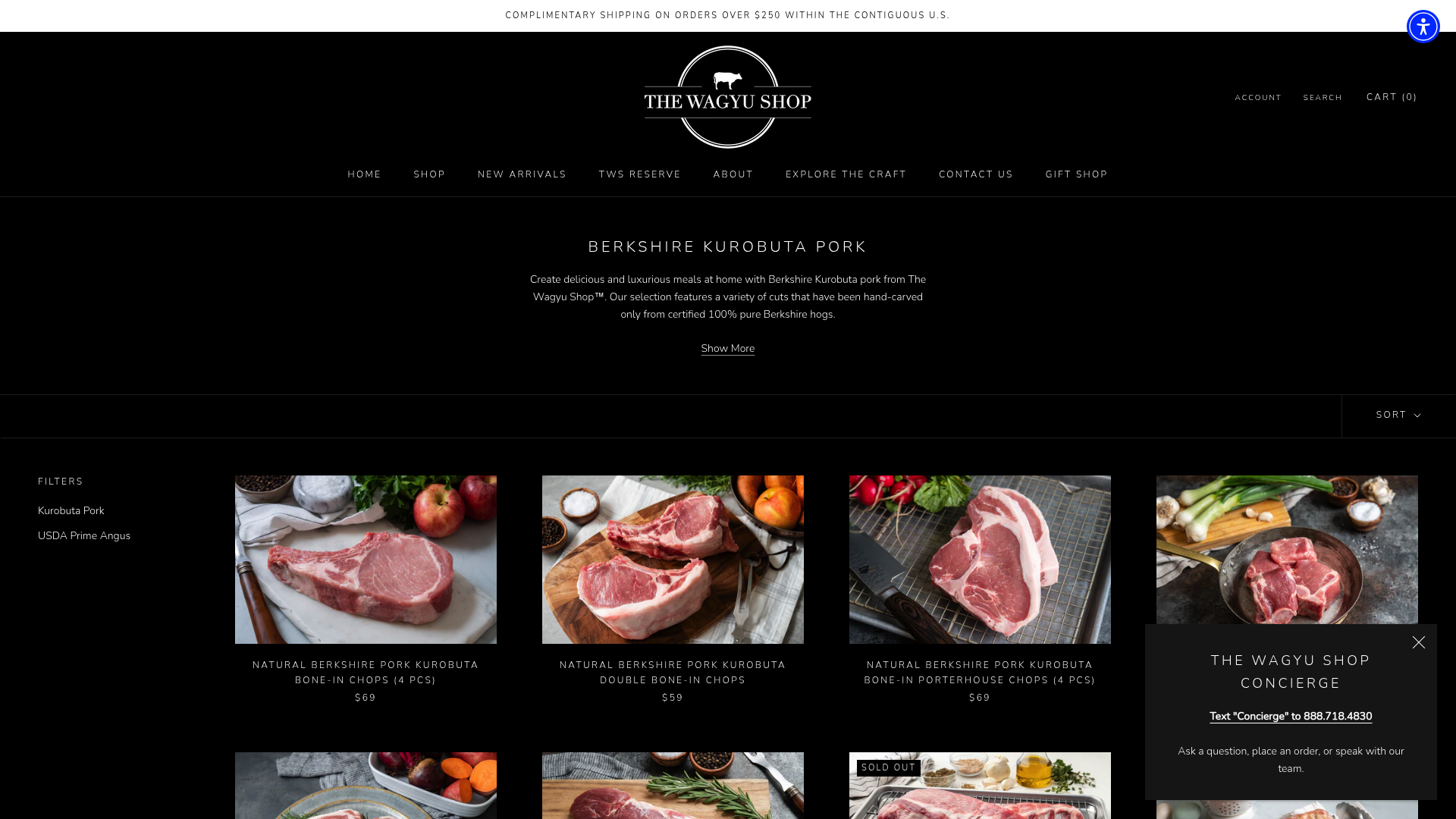
Because the meat is so rich, you might want to approach certain cuts differently than you would with grocery store pork. You can find many of these in our Kurobuta Pork Collection.
Frenched pork chops
The Frenched pork chop is the classic choice for a premium dinner. “Frenching” refers to the process of removing the meat and fat from the bone, which results in a beautiful presentation. These are ideal for pan-searing and finishing in the oven. Because of the marbling, they are incredibly forgiving and stay moist even if you slightly overcook them.
Double bone chops
If you want the ultimate juicy experience, go for the Double Bone Pork Chop. These are extra-thick cuts that let you achieve a deep, dark crust on the outside while keeping the center perfectly tender. They are great for the grill or reverse searing.
Pork collar
This cut is gaining massive popularity among chefs. While most people reach for a pork shoulder (Boston butt) for roasting, the Pork Collar vs Pork Shoulder is actually superior for several reasons. It has a more consistent fat distribution and a more refined texture than the shoulder. It is perfect for a slow-roasted centerpiece or for slicing into steaks.
Specialty items
Do not overlook the smaller or more processed cuts. Kurobuta bacon and hams are significant improvements for breakfast or holiday meals. The same heritage fat that makes the chops so good also makes the bacon crisp up perfectly while remaining tender. We also recommend looking at pork shanks for braising or American Kobe Wagyu boneless prime rib if you want to branch out into other premium meats.
| Cut | Best Cooking Method | Ideal For |
|---|---|---|
| Frenched Chop | Pan-sear / Oven | Dinner parties |
| Double Bone Chop | Grill / Reverse sear | Weekend BBQ |
| Pork Collar | Slow roast / Braise | Family gatherings |
| Spare Ribs | Smoke / Slow cook | Classic BBQ |
| Pork Shank | Braise | Comfort food |
Essential tips for cooking Kurobuta pork
The biggest mistake you can make with Kurobuta pork is treating it like the dry, lean pork of the 1990s. Here is how to handle it properly to ensure you get the most out of your investment.
The 145°F rule
For decades, we were told to cook pork until it was white and dry to ensure safety. Today, the USDA recommends an internal temperature of 145°F for chops and roasts, followed by a three-minute rest. This leaves the meat slightly pink and incredibly juicy. With Kurobuta, this is critical. If you cook it to 160°F or higher, you are melting away the very fat that you paid a premium for. Cooking Pork Chops is Easy (Really!)
Technique: The reverse sear
For thick cuts like the Double Bone Chop, we recommend the reverse sear. This involves cooking the meat at a low temperature (either in the oven or on the indirect side of a grill) until it reaches about 130°F. Then, you move it to a hot pan or the grill’s direct heat to get a quick sear on the outside. This ensures edge-to-edge tenderness and a perfect crust.
Seasoning philosophy
When the meat is this good, less is more. We recommend starting with just plenty of kosher salt and black pepper. You want the natural sweetness and buttery flavor of the Berkshire pork to be the star. If you want to add more complexity, consider Japanese-inspired pairings like miso, ginger, or yuzu kosho. Savory herbs like rosemary, sage, and thyme also complement the rich fat beautifully.
Pairing ideas
- Glazed carrots: Sautéed in honey or brown sugar to match the pork’s sweetness.
- Roasted sweet potatoes: Provide a crisp exterior and a soft, sweet interior.
- Steamed green beans: Add brightness and a “pop” of freshness to balance the richness.
- Sautéed mushrooms: For an extra hit of umami.
Elevate your next meal with premium heritage pork
Bottom line? Kurobuta pork is not just “better pork.” It is a different experience entirely. Whether you are planning a special holiday meal or you just want to see what all the fuss is about, we highly recommend trying a heritage breed.
We have spent years testing and reviewing the best meat purveyors, and we consistently find that quality sourcing makes the biggest difference in your cooking. You can explore the full Snake River Farms collection on our site, or check out our guide to the best Snake River Farms products for more recommendations. If you are looking for other high-end options, we also review Double R Ranch USDA Prime steaks and 10oz ribeye filets.
Ready to upgrade your dinner table? Start with a Frenched chop and see for yourself why chefs around the world refuse to cook with anything else.
Frequently Asked Questions
What exactly makes Kurobuta pork different from the pork I buy at the grocery store?
Kurobuta pork comes from purebred Berkshire hogs, which are a heritage breed. Unlike standard commodity pigs, these hogs have a genetic predisposition to higher marbling, darker color, and higher pH, which makes the meat juicier and more flavorful.
Is Kurobuta pork too fatty for a healthy diet?
While Kurobuta is more marbled than standard lean pork, this fat is intramuscular (inside the muscle), which provides flavor and tenderness. It is a premium product intended for an elevated dining experience rather than a ‘low-fat’ commodity.
Why is Kurobuta pork so much more expensive than regular pork?
The cost reflects the heritage genetics and the slower growth rate of the Berkshire hogs. These pigs take longer to mature and are often raised on small family farms with higher welfare standards and specialized diets, all of which contribute to the premium flavor.
Do I need special equipment to cook Kurobuta pork properly?
No, you do not need special equipment, but we highly recommend using a reliable meat thermometer. Because the meat is best enjoyed at a medium internal temperature (145°F), knowing the exact temperature is the best way to prevent overcooking.
Can I find Kurobuta pork at my local butcher?
It depends on your location, but most standard grocery stores do not carry it. You are more likely to find it at high-end specialty butchers or by ordering online from reputable sources like Snake River Farms or The Wagyu Shop.
What is the best way to prepare Kurobuta pork for a first timer?
We recommend starting with a simple bone-in pork chop. Season it generously with salt and pepper, pan-sear it in a cast-iron skillet with a little butter, and cook it until it reaches an internal temperature of 145°F. Let it rest for at least three minutes before serving.
More Articles:
Best Thomas Tew Rum – Rwanda Rum Barrel Aged Coffee – 12oz 5 lb / French Press
Discover the unforgettable taste of American Wagyu beef
American Kobe Wagyu Brisket 14-16lb. Review